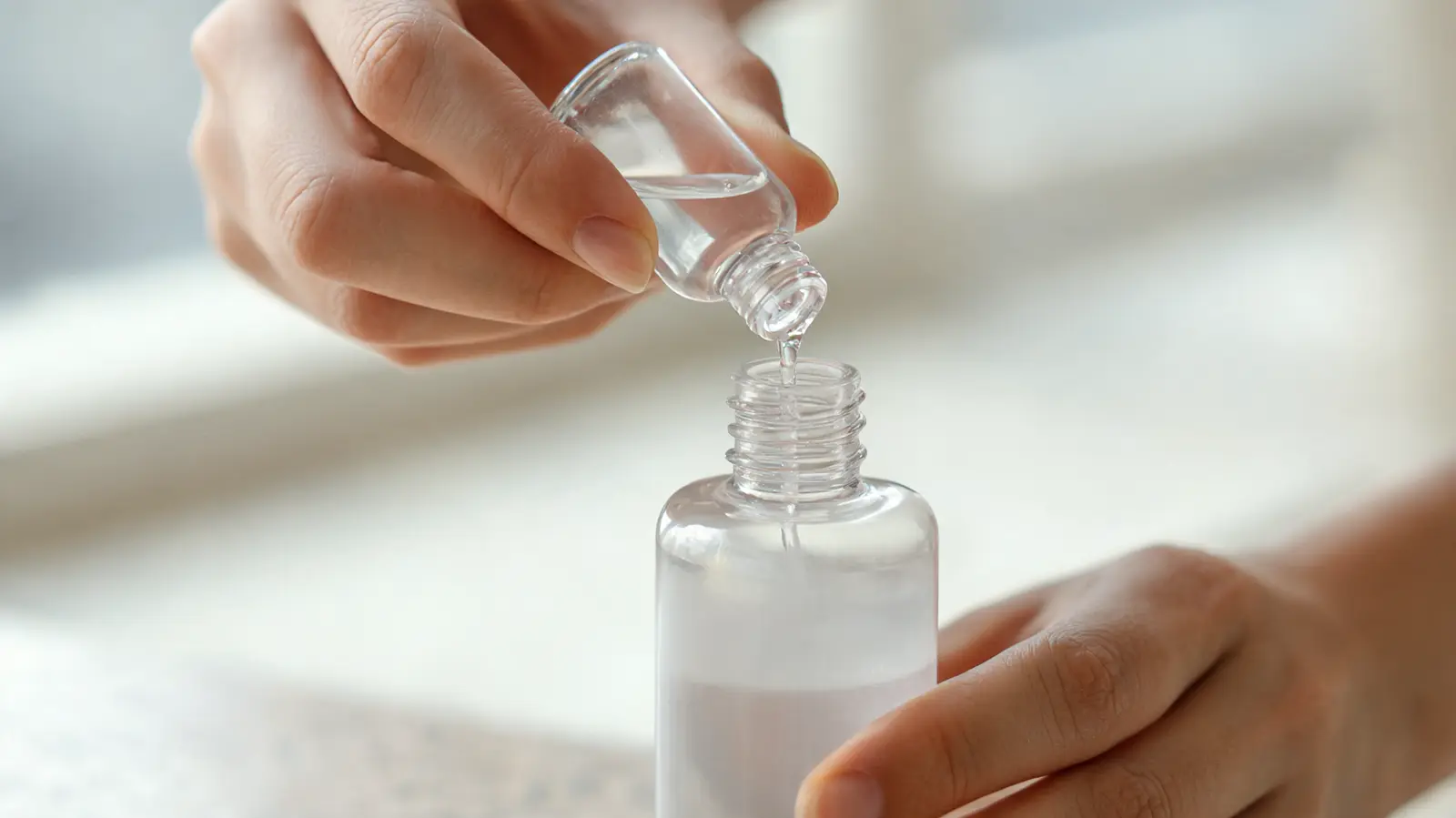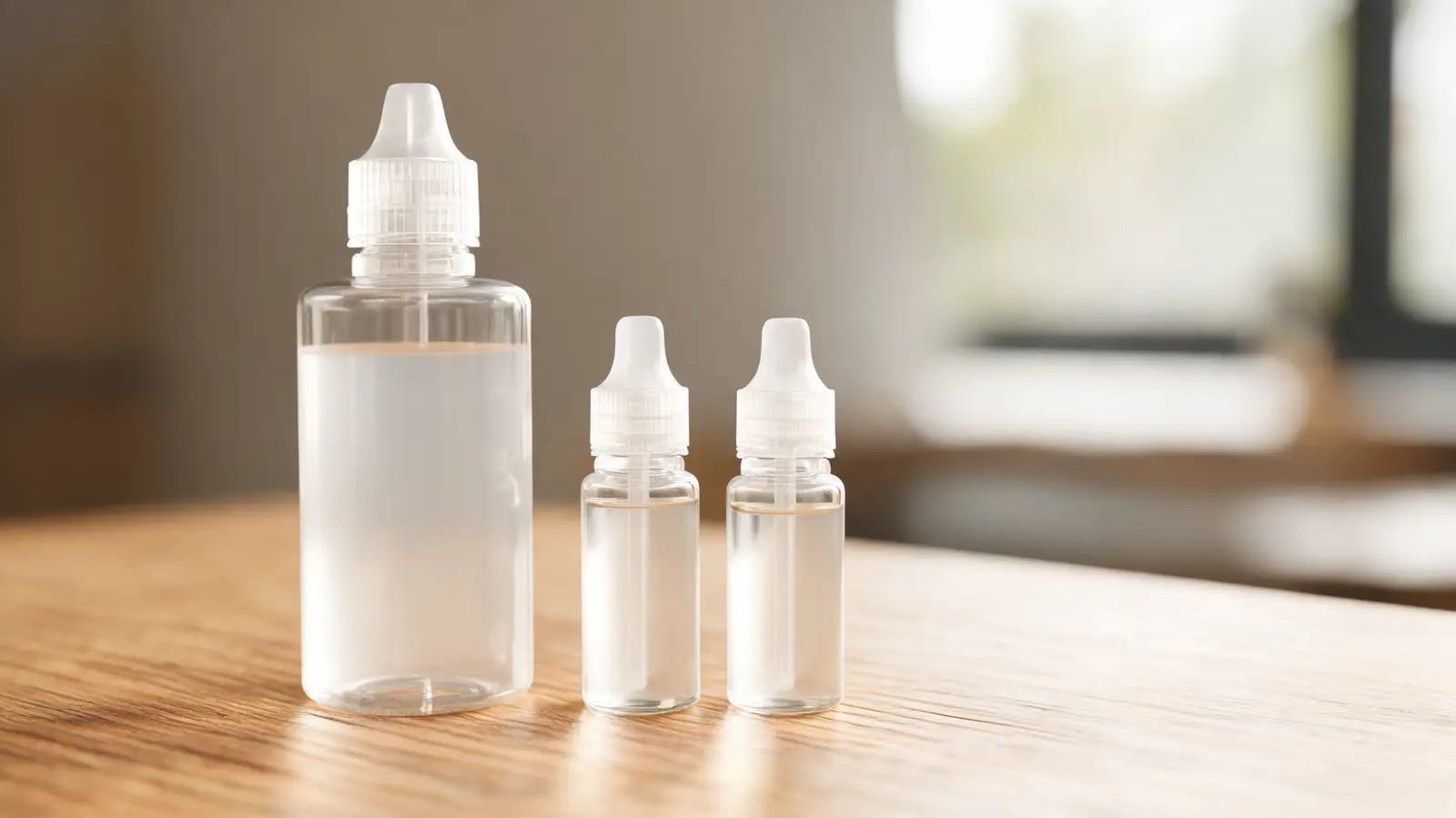
A shortfill is a large bottle of nicotine-free e-liquid, usually 50ml or 100ml, that's deliberately under-filled so you can add nicotine shots yourself. They exist because UK law caps bottles of nicotine e-liquid at 10ml. Add one 10ml shot at 18mg/ml to a 50ml shortfill and you get 60ml at 3mg/ml. Shortfills are mostly thick, high-VG liquids made for sub-ohm kits, so they're often a poor match for small pod vapes. Our e-liquid hub puts shortfills in context with nic salts, strengths and the UK rules.
Why shortfills exist
The rule behind them is regulation 36 of the Tobacco and Related Products Regulations 2016. It says a dedicated refill container of nicotine-containing liquid can't hold more than 10ml, and nicotine liquid can't be stronger than 20mg/ml.
That limit only applies to liquid containing nicotine. So manufacturers started selling flavoured liquid without nicotine in bigger bottles, leaving space at the top. You buy the nicotine separately in 10ml shots and mix it in. It's legal, it's common, and it's why UK vape shops have shelves of 50ml and 100ml bottles next to the 10ml ones.
What strength you end up with
This is the part to get right. Shortfills don't have a strength until you add nicotine, and the result depends on how much liquid there is in total.
| Shortfill size | Usual bottle size | Shots that fit | Final volume | Final strength (18mg shots) |
|---|---|---|---|---|
| 50ml | 60ml | One | 60ml | 3mg/ml |
| 100ml | 120ml | Two | 120ml | 3mg/ml |
| 100ml | 120ml | One | 110ml | about 1.6mg/ml |
| 50ml or 100ml | Any | None | Same | 0mg |
With 20mg/ml shots the figures go up slightly. One in a 50ml shortfill gives about 3.3mg/ml.
The formula is simple: multiply the shot volume by its strength to get the total milligrams of nicotine, then divide by the final volume. One shot is 10ml × 18mg = 180mg. Spread through 60ml, that's 3mg/ml.
What you can't do is reach high strengths. A shortfill topped up with shots lands at low single figures. That suits sub-ohm vaping, where a big kit produces a lot of vapour per puff. It doesn't suit most pod kits, which are designed around 10mg or 20mg nic salts. Our guide on what nicotine strength to vape explains why.
The nicotine shot guide has the step-by-step for adding a shot safely.
What's in a typical shortfill
Most share a few traits:
- High VG. Usually 70/30 VG/PG or more. Thick, smooth and cloud-heavy. See the VG/PG ratio guide.
- Strong flavour. Made a touch stronger so they still taste right after an unflavoured shot dilutes them.
- Freebase-style. They're built for freebase nicotine shots, though nic salt shots exist.
Reading a shortfill label
A few things on the bottle tell you what you're getting:
- The volume. 50ml or 100ml is the liquid inside. The bottle itself is bigger.
- The space left. Many labels say "room for 1 nic shot" or show the bottle size, such as 60ml or 120ml.
- The VG/PG ratio. If it's 70/30 or "max VG", it's thick.
- 0mg. All shortfills are 0mg as sold. That's the point.
UK shortfills also carry warnings and child-resistant caps, and it's worth reading the small print for the recommended number of shots. Some brands design a 100ml bottle around two shots and say so.
Shortfills vs 10ml e-liquids
| Shortfill | 10ml e-liquid | |
|---|---|---|
| Nicotine | None until you add it | Already in the bottle |
| Common strength after mixing | Around 3mg/ml | 10mg or 20mg nic salt; 3mg to 18mg freebase |
| Typical VG/PG | 70/30 or higher | 50/50 for nic salts |
| Best device | Sub-ohm tank kits | Pod kits |
| Effort | Mix before use | Ready to go |
Should you use shortfills in a pod kit?
For most pod users, no. Two problems stack up.
First, the liquid is thick. Small mouth-to-lung coils can't soak it up fast enough, so you get dry or burnt hits. The burnt taste guide covers that.
Second, the strength is low. If you're used to 20mg nic salt, a 3mg shortfill will feel like very little, and you may end up puffing constantly, which empties pods and wears coils faster.
There are exceptions. Some pods with lower-resistance coils, often around 0.6 ohm, handle thicker liquid better, and some people vape 0mg or very low nicotine by choice. If that's you, a shortfill can work. Check your coil's guidance and see our vape coil guide.
For everyone else, the 10ml nic salts in our nic salt vs freebase guide are the easier route.
Using shortfills at 0mg
Plenty of people vape shortfills with no nicotine at all, just for the flavour and the vapour. Nothing to add, nothing to calculate. The same point about thick liquid in small coils still applies.
Longfills, briefly
You may also see "longfills". These are bottles holding a small amount of flavour concentrate, with lots of space left. You top them up with unflavoured base liquid and nicotine shots yourself. They're more of a hobbyist product and need more care with the mixing.
How much a shortfill lasts
A 60ml mixed bottle goes a long way compared with a 10ml, but sub-ohm kits also use liquid much faster than pod kits. Our guide to how many puffs are in 10ml explains why puff counts vary so much.
If you're browsing flavours rather than formats, the flavour library sorts them by family.
Questions people ask
Why are shortfills called shortfills?
Because the bottle is deliberately not filled to the top. A 50ml shortfill usually comes in a 60ml bottle, leaving room to add a 10ml nicotine shot.
Do shortfills contain nicotine?
No. Shortfills are sold nicotine-free. UK law only allows nicotine e-liquid in bottles of up to 10ml, so the bigger bottles leave the nicotine out and let you add it.
What strength is a 100ml shortfill with two nic shots?
With two 10ml shots at 18mg/ml, you get 120ml at 3mg/ml. With one shot, it's 110ml at about 1.6mg/ml.
Can I use shortfills in a pod vape?
Some pod kits with lower-resistance coils manage, but most shortfills are thick high-VG liquids and the finished strength is low. Many pod users get on better with 10ml nic salts.